How to Learn Japanese with Visual Novels
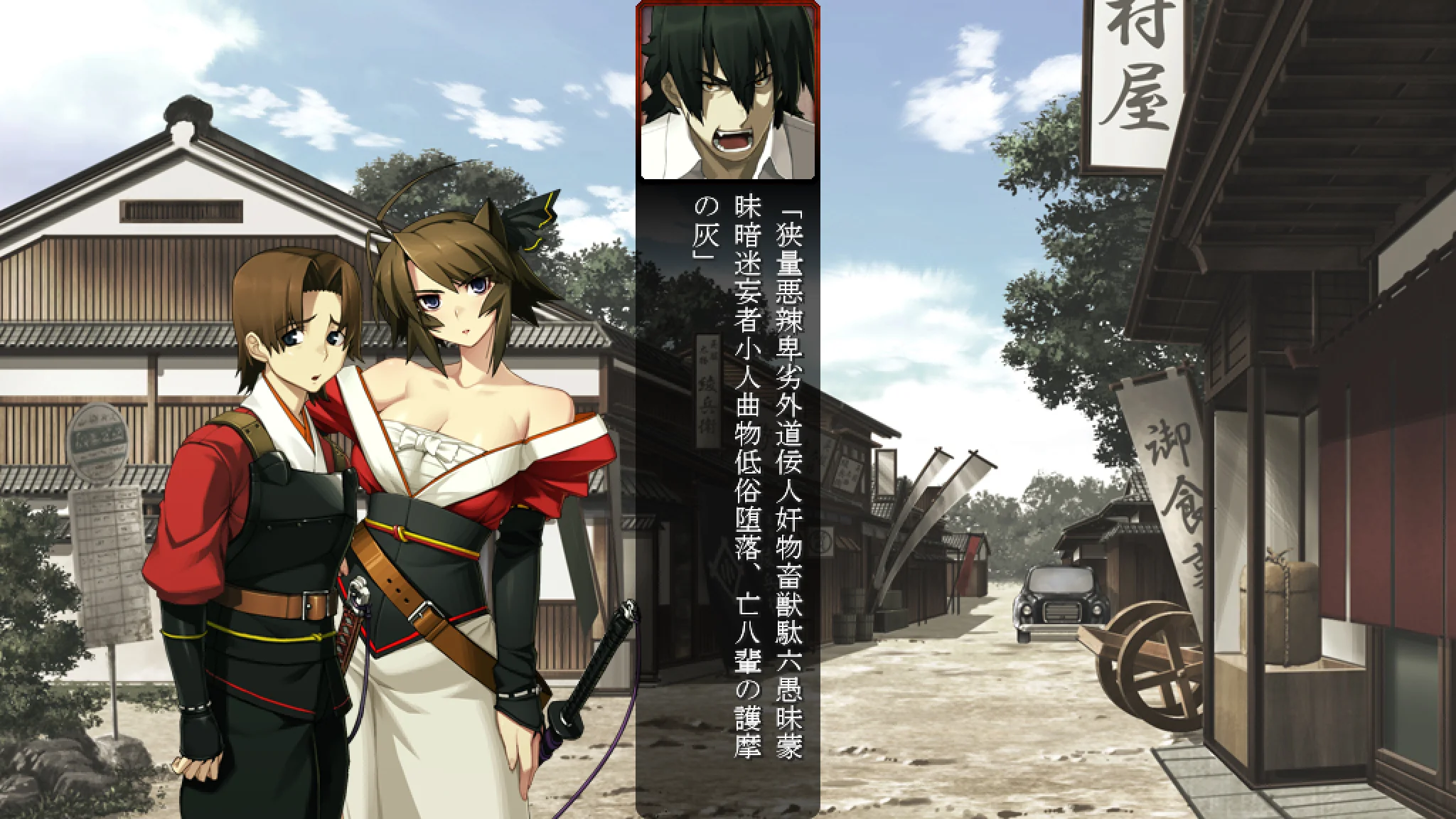
Visual novels are by far the best medium for anyone trying to learn Japanese. Here are a few reasons.
- Extensive reading practice - VNs contain thousands of lines of dialogue and narration
- Native audio - Many VNs are fully voice-acted by professional voice actors
- Visual context - CGs and backgrounds help you understand situations
- Engaging content - You're reading stories you actually want to follow
Unlike textbooks, VNs are real Japanese media: stories written by native speakers for a native audience.
The Japanese Writing System
Looking at the Japanese writing system, you'll see it's comprised of three main scripts: Hiragana, Katakana, and Kanji.
Hiragana and Katakana (Kana)
Hiragana and Katakana, which we'll refer to collectively as kana, are phonetic scripts with about 46 characters each. They represent the same sounds but have different uses. At first, you may question why Japanese has two scripts for the same sounds, but keep in mind that the Latin alphabet also has both lowercase and uppercase letters.
- Hiragana - Primarily used for grammar particles, native Japanese words, and words of Japanese origin
- Katakana - Used for loanwords (like コーヒー for "coffee"), slang, onomatopoeia, and emphasis
These are the easier scripts to learn. Because they're phonetic, once you learn them you can read any kana text out loud, even if you don't understand what it means.
Kanji (Chinese Characters)
One of the biggest hurdles when learning Japanese is kanji, the set of logographic characters adopted from Chinese. Japanese uses around 2,000 to 3,000 common kanji in everyday writing.
Kanji is essential because most content words are written using it. Unless you're planning on limiting yourself to playing full-kana children's games, you'll need to learn them. Each kanji can also have multiple readings, which adds to the complexity.
How everything works together
Japanese typically mixes both kana and kanji. This might seem complex at first, but as it all starts to gel in your brain, it's not as difficult as it may seem.
Hiragana Chart
| a | i | u | e | o | |
|---|---|---|---|---|---|
| ∅ | あ a | い i | う u | え e | お o |
| K | か ka | き ki | く ku | け ke | こ ko |
| S | さ sa | し shi | す su | せ se | そ so |
| T | た ta | ち chi | つ tsu | て te | と to |
| N | な na | に ni | ぬ nu | ね ne | の no |
| H | は ha | ひ hi | ふ fu | へ he | ほ ho |
| M | ま ma | み mi | む mu | め me | も mo |
| Y | や ya | ゆ yu | よ yo | ||
| R | ら ra | り ri | る ru | れ re | ろ ro |
| W | わ wa | を wo* | |||
| N | ん n |
Katakana Chart
| a | i | u | e | o | |
|---|---|---|---|---|---|
| ∅ | ア a | イ i | ウ u | エ e | オ o |
| K | カ ka | キ ki | ク ku | ケ ke | コ ko |
| S | サ sa | シ shi | ス su | セ se | ソ so |
| T | タ ta | チ chi | ツ tsu | テ te | ト to |
| N | ナ na | ニ ni | ヌ nu | ネ ne | ノ no |
| H | ハ ha | ヒ hi | フ fu | ヘ he | ホ ho |
| M | マ ma | ミ mi | ム mu | メ me | モ mo |
| Y | ヤ ya | ユ yu | ヨ yo | ||
| R | ラ ra | リ ri | ル ru | レ re | ロ ro |
| W | ワ wa | ヲ wo* | |||
| N | ン n |
Notes: *は = "wa" as particle, を = "o" as particle. Dakuten (゛) and handakuten (゜) modify sounds.
Here's the truth: you don't study until you can read VNs, you study WITH them. The moment you know kana and some basic grammar, you should be attempting to read. Yes, it will be overwhelming at first, but that's how you actually learn.
If you've made the decision to learn Japanese, the best thing you can do is tell yourself that if you want to enjoy Japanese media, it must be in the original language. This separates people who make it from those who don't.
The Immersion-First Approach
Forget about "building foundations" before actually getting into things. This is a trap that will forever keep you stuck in textbooks and prevent you from ever getting to the content that you came here for. Don't be afraid to jump in early. It may be scary, but trust me, there's nothing to be afraid of. Sure, it might be confusing at first, and you'll have to look up a ton of words, but that's exactly what you should be doing. Once you stop being afraid and push past the initial discomfort, you start allowing yourself to learn.
Here's how I like to think about it: as a child, you don't need to spend years studying grammar before attempting to understand stories. Children are thrown into the language from day one, picking up patterns through hundreds and thousands of hours of exposure. The exact same idea applies here.
At first, it might seem impossible, and despite all your effort, results may not immediately be apparent to you. However, if you trust the process and make a serious effort to understand all Japanese text that you interact with, you will certainly improve. If you keep telling yourself that you absolutely NEED translations, and that you're still just "not ready" for real native content, you won't.
Your actual timeline: Learn kana (1 week maximum), start the Kaishi 1.5k Anki deck, set up your tools, and immediately start engaging with native content. Don't wait for some arbitrary "readiness" milestone that doesn't exist.
Step 1: Master the Basics
Learn Hiragana and Katakana (1 week maximum)
This step should only take you a maximum of a week. If you're spending more than a week on this, you're not really trying to learn Japanese. I don't mean to be insulting or demeaning to people who do this, but if you've been stuck on kana for months, chances are you have a mindset issue that needs to be fixed.
I'm going to give you the fastest way to do it here. You should immediately go to our interactive kana quiz and play it. Yes, now. No, don't finish reading the rest of this first. Go learn kana. Just play the game until you can basically recognize most of them. I don't want you to aim for 100%. You'll get there naturally later on just by seeing it so much.
What you need to understand here is that you will learn kana much faster by seeing it in actual Japanese text, rather than just sitting there drilling it. If you can recognize the kana, even if it takes a second, then you're good to go. You'll get faster and better as you read.
The perfectionist trap: Many people spend months on kana before even touching anything actually written in Japanese. This is the wrong way to do it. You need to get to the point where you're comfortable, and then let reading take over.
Start Building Vocabulary
When it comes to building your Japanese vocabulary, it's best to start immediately and have it go hand-in-hand with your reading, not before it. The Kaishi 1.5k deck was made for this exact purpose. It's the most beginner-friendly option available, and uses real example sentences to get you started.
Aiming for 10-15 new words a day, you'll soon discover which words are commonly used in the VNs you're reading. This creates a beautiful feedback loop: Anki introduces you to the words and the VNs put them into context, reinforcing what you've learned.
The great thing about starting to learn vocabulary alongside reading is that you'll immediately see Anki words appearing in your VNs. Coming across a word that you've recently learned is a huge motivator, and really helps you remember it for the long-term.
Isolated kanji study (like RTK or KKLC) can be useful, but beginners often find themselves stuck using this method for months without making any significant progress. Learning kanji through real sentences and reading is much more practical and immediately useful to someone who wants to start reading in Japanese. If Kaishi feels too difficult, try out the RRTK450 deck as you may find it easier to manage, but don't let isolated kanji study become your main use of time and prevent you from getting started with real content.
Basic Grammar Foundation
Primary recommendation:
- Tae Kim's Grammar Guide - Admittedly, it's not perfect, but it's a quick read and that's the main reason why it is so frequently recommended.
For deeper understanding:
- IMABI - Covers everything from beginner to more advanced grammar, and is much better in terms of accuracy. However, it could be off-putting if you're easily overwhelmed as it is a comprehensive and voluminous resource. Honestly, if you can handle more technical discussion of grammar, I would recommend this one any day over Tae Kim. I only don't make it the top pick because I know not everyone is enough of a grammar nerd to care enough to push through. Either way, it can serve as your go-to for more detailed explanations of complex grammar points later on.
Alternative approaches:
- Yokubi - Open-source rewrite and rearrangement of Sakubi
- Sakubi - Structured grammar course with lots of examples
- Bunpro - SRS-based grammar learning with built-in reviews
Remember: no matter how much you learn from guides, putting it into practice is the best way to actually master Japanese grammar.
Study approach:
- Keep reading grammar points while learning vocab, rather than saving them for later
- Focus on recognizing patterns rather than memorizing rules
- Always try to understand grammar in context
- Don't aim for perfection—understanding develops over time with exposure
Step 2: Set Up Your Reading Tools (Do This Immediately)
A lot of people use tool setup as an excuse to never actually start. "I'll get into VNs once I have everything configured perfectly." Months pass. They're still tweaking settings instead of reading.
Don't fall into that trap. Yes, you need these tools, but you don't need a perfect setup. Get the basics working and start reading. You can optimize later, once you've actually proven to yourself that you'll use them.
Essential Software Setup
You'll need three core tools to start reading VNs. Don't overthink this, just install them and move on.
1. Anki - Your Vocabulary Foundation
While you can get really good at reading Japanese without Anki through interacting with native text, this spaced repetition system is a very powerful tool for retaining vocabulary you encounter in your reading.
What it does: It helps you actually remember words long-term by showing you cards right before you'd forget them.
Setup: Refer to our Anki guide to get it set up.
2. Dictionary Tool - Choose Your Lookup Method
When you come across a Japanese word you don't know, you'll need a dictionary to look it up. You've got two main options here:
Best choice for most learners
JL is a sleek, intuitive pop-up dictionary made specifically for visual novel readers and learners. It's the go-to choice for VN reading.
Why choose JL:
- Works system-wide (no browser required)
- Integrated Anki mining features
- Reading statistics and progress tracking
Setup: Follow our JL guide for the full installation and configuration process.
Choose this if you prefer browser-based tools
Select Yomitan if you prefer browser-based reading or need to look up text on websites frequently.
When to use Yomitan:
- You prefer reading VNs in browser
- You frequently look up text on Japanese websites
- You want a more traditional dictionary extension experience
Setup: Follow our Yomitan guide for complete installation and configuration.
A text hooker is essentially a text extraction engine. Tools like Textractor strip out Japanese text from visual novels so you can copy, look up, and dig up words without tediously typing out the characters. Eventually you'll get to a point where you can comfortably read without one, but having it makes looking up words way easier.
What it does: Hooks into VN processes and extracts displayed text in real-time for easy dictionary lookups.
Setup: Check out our Textractor guide to get it set up.
Key features: Works with most VNs, supports extensions, and has WebSocket integration for browser dictionaries.
Alternative tools: If Textractor doesn't work with your game, you can try Agent for script-based hooking or OwOCR for OCR-based text extraction.
Install them in this order: Anki first, then your dictionary tool, then the text hooker. Each tool builds on the previous one.
📚 SRS ←→ 📖 Dictionary ←→ 🔗 Text Hooker
Anki ↔ JL / Yomitan ↔ Textractor / OCR
When diving into Japanese visual novels, a text hooker, a dictionary, and Anki are essentially all you need to get started. They extract the text, help you look up and mine new words, and lock them into your memory. This is your core setup. Everything else is just extra.
Step 3: Jump Into Your First Visual Novel
Choosing Content for Maximum Learning
Pick something you're genuinely interested in reading, even if it seems challenging. Playing something you actually want to finish goes much further than forcing yourself through something easy but uninteresting. Of course, everyone has a different tolerance for difficulty, so if it feels like too much, you can always put it on hold and come back later.
Struggling to find enjoyable content is relatable, and there's no pressure to finish anything. If you aren't feeling it, you just aren't feeling it. I'm not saying you have to start 20 things at once, but don't force yourself to push through something that isn't working for you.
You need to be all in, not just "trying" Japanese, but genuinely enjoying the medium from the start. There are features that make the learning process a lot smoother, though. Things like furigana support, which gives you hiragana readings above the kanji, can be helpful for beginners.
Modern and everyday words are much easier to learn than archaic or made-up words, and voice acting can give you a fantastic pronunciation model and aid in listening comprehension. Finding a story with a manageable length is a psychological boost, it makes the experience feel achievable, and builds your confidence for longer works.
Don't let the length of a story scare you away. It's far better to plough through something interesting than zip through something dull.
Recommended First VNs
- Nanairo Reincarnation - Supernatural mystery with romance and comedy
- Tsuyuchiru Letter - Yuri romance set in a prestigious girls' school
- Gyakuten Saiban (Ace Attorney) - Also known as Ace Attorney in the west. The famous legal mystery series with engaging courtroom drama
- Marco to Ginga Ryuu - Extremely engaging, but short visual novel with tons of CGs
- 9-nine- Series - Supernatural life-and-death drama. Starts out slow, but gets better towards the end
- Totono - Psychological romance involving a dramatic love triangle
- Famicom Detective Club - Classic murder mystery series. Available on the Switch and practically fully voiced
- Summer Pockets - Island summer story by Key. Long, but lots of slice of life content
- Clannad - The classic Key drama
- Kanon - The other classic Key drama
- Aokana - Sports drama in a world with anti-gravity flying
Free Options for Practice
- Browse NovelGame.jp - Many free short VNs for practice
- Check Freem! - Free games including visual novels
- Try web-based VNs - No installation required, good for testing setup
Step 4: Reading Strategy and Building Sustainable Habits
The Core Philosophy: Serious Engagement from Day One
Remember your commitment: if you want to enjoy Japanese media, it must be in the original language. This isn't about casual exposure or "trying" Japanese; it's about making a serious effort to understand all Japanese you interact with. You don't need to go "AJATT" or block out other languages, but you do need genuine engagement with the language. Resist the urge to reach for translations when things get difficult.
Daily Reading Strategy
Start Your Reading Sessions Right
Approach each VN session with the mindset that you're experiencing a story in Japanese, not studying Japanese through a story. Have your tools ready, but don't let technical setup distract from the core activity: reading and understanding.
The Smart Lookup Strategy
- Look up words you see frequently - these give you the highest learning value
- Look up key story elements - names, important concepts, anything crucial to your understanding of the story
- Don't assume that you know the meaning of words - your intuition as a non-native speaker is not going to be perfect
How to Approach Difficult Sentences
You can take as long as you want on any sentence, and should try your absolute best to understand it before moving on. Analytical reading will only benefit you if you aim to improve your comprehension. That said, if you find that it prevents you from actually making any progress in what you're reading, you're going to limit your exposure to new things, and that might actually impede your progress.
Don't get into the habit of giving up on trying at all. If something isn't clicking, and you can look it up, it's probably best that you do. Seeing a certain structure or word enough times might be all it takes for it to click. In some cases it might take additional effort. Things are going to be slow at first, but if you put in effort into understanding the media you interact with, eventually things will just click the first time you see them, and you'll naturally speed up.
The Importance of Comprehensible Input
Your goal is "comprehensible input": content that you can mostly understand with some effort. It's essential to engage with the text, and don't mindlessly "whitenoise" it (reading Japanese without caring about comprehension). It won't do anything for your learning. The goal is to find that sweet spot where you can follow the story and still have enough unknowns to learn from. If you understand almost nothing, the content may be too difficult. If you understand everything easily, you're not being challenged enough to grow.
Don't let numbers get in the way of your progress. Seeing a low character count or not reaching your reading goals for the day can be discouraging, but those statistics don't define you or your progress. What's more important is that you show up and put in a genuine effort to understand what you read. Your comprehension and reading speed will naturally improve through regular exposure. Trust in your ability to learn and absorb, and don't obsess over the mechanics.
Building Vocabulary Through Mining
What is mining?
Mining is the process of finding vocabulary in the wild (while reading VNs, playing games, etc.) and adding that vocabulary to a custom Anki deck for long-term retention.
As you read, you'll naturally encounter words worth learning. Mining vocabulary from your VNs creates personalized learning that's directly relevant to your interests.
Remember: Anki is designed for memory, not learning. You want to mine words that are about 75% of the way there: words that seem useful and can actually be remembered after a couple exposures. The goal is finding that sweet spot between learnable, useful, and not super uncommon.
Smart Mining Strategy:
- Encounter unknown word during reading
- Look up the word using JL or Yomitan's integrated lookup
- Ask yourself: Is this word learnable, useful, and frequent enough?
- Mine only if it passes the "75% test" - you can grasp it and it seems worth remembering
- Create Anki card with the sentence context from your VN
The "75% Test" - Mine words that are:
- Learnable - You can understand and remember them after a few exposures
- Useful - They appear frequently or are crucial to story understanding
- Not too obscure - Common enough that you'll see them again in other content
- Feel "graspable" - Something clicks when you look them up
What NOT to Mine (Especially as a Beginner):
- Words that feel completely overwhelming or abstract
- Extremely rare or archaic terms you'll never see again
- Technical jargon unrelated to your interests
- Words you consistently understand from context
When you're at a higher level, you can pretty much mine anything since your understanding is solid. At lower levels though, it's best to pick and choose the words you mine so that you can build a strong foundation.
For advanced mining, Donkuri's comprehensive mining guide goes into the intricacies of mining setups, note types and more technical points, and is definitely worth checking out. If you're using JL, our suggested dictionary, our JL Anki integration guide will make your VN mining a breeze.
Building Daily Consistency

The most important thing is showing up every day. When and how long you study matters less than never missing a day.
Daily Reading: Your Primary Learning Activity
Read your VN every day, even if just for 15-30 minutes. This is your main learning time, not a reward for completing other studies. Some days you'll read for 30 minutes, others for two hours. Let your energy and interest guide the session length, but try not to skip it entirely.
Daily Anki: Non-Negotiable
Anki is built around the idea of daily completion. It's significantly less effective if you miss days, and the spaced repetition algorithm relies on regular, consistent reviews. If you're finding your daily load too much, there are a few things you can do. Reduce the number of new cards you're adding each day, or adjust your target retention percentage in the FSRS settings. Just don't skip your reviews, or the whole thing falls apart.
Grammar: As-Needed Basis
Learning to read Japanese is very similar to the mindset of a programmer: when there's something you don't understand, you look it up. Grammar study should happen when you encounter something confusing, not on a rigid schedule. You'll learn more grammar through making an effort to understand sentences in context than through isolated study.
The Consistency Mindset
Your daily engagement streak matters more than perfect sessions. Missing a day breaks the habit and makes it harder to restart. The goal is making Japanese interaction a daily habit, not achieving perfect study sessions.
Recognizing Real Progress
Early Victories (First Month)
The first major milestone isn't comprehension, it's beginning to become comfortable with confusion. When you stop panicking about unknown words and start seeing reading sessions as entertainment rather than tests, you've made a crucial mental shift. This usually happens within the first few weeks of consistent reading.
Successfully setting up your workflow and extracting your first VN text feels technical, but it's actually a huge psychological win. You have made your first step towards Japanese literacy.
Building Momentum (Months 2-6)
Around months 2 to 6 you'll see a significant pick-up in progress, when building on your Japanese foundation. Seeing vocabulary from Anki pop up in VNs starts a wonderful positive cycle that sends your learning into overdrive. It's also when you'll notice your brain adjusting to processing Japanese without too much mental strain, and reading for longer periods of time becomes more manageable. Finishing your first VN, even if it took you a while, is an enormous accomplishment and will give you the confidence to go further.
Long-term Development (6+ months)
Eventually, reading shifts from being a mere part of your study routine to entertainment. You'll choose VNs based on interest rather than difficulty level. This transition from learning Japanese to learning through Japanese marks true immersion success.
These timelines are not strict requirements. Being consistent and dedicated to building sustainable habits will do far more for you than chasing arbitrary milestones.
Trusting the Process
You may not always be able to verify whether you truly understood something. If you're really unsure, you can always ask others, but that's obviously not realistic for every line in a work. You have to, to some extent, just trust that the process is working. It may help to revisit the same text at a later date to see how your understanding has changed. The only way you won't make progress is if you stop interacting with the language entirely, or just stop attempting to understand it at all.
Dealing with Challenges
When you feel overwhelmed, try taking a break, reviewing your Anki cards, re-reading previous sections, or reminding yourself that confusion is part of the learning process. If you feel like you're under pressure, you could lower your daily new card count or alter your target retention percentage in FSRS settings. Try to keep up with your reviews if you can, as they're what help lock things into long-term memory.
Remember:
- Every Japanese sentence you read makes the next one easier
- Progress isn't always visible, so trust the process
- Comparing yourself to others is counterproductive
- The journey is part of the reward, so enjoy it as much as you can
"Read more." – Everyone who made it
Quick Start Checklist
Here is your to-do list when starting to learn Japanese:
- Day 1-3: Learn kana basics with charts and our kana quiz
- Day 4-5: Set up JL (or Yomitan) plus Textractor
- Day 6-7: Download the Kaishi deck, kickstart Anki, pick your first VN
- Week 2: Start reading your chosen VN every day, even if it doesn't make sense at first
- Week 3+: Build a regular routine of Anki and VN reading
- Month 1+: Begin to mine interesting words from your VNs as you come across them
The thing is, you're not preparing to learn Japanese, you're diving straight in. Each day you put off reading is a day of lost progress. It's normal to feel disoriented, overwhelmed and often completely lost, but that's what happens when learning a language. Just start now, stick to your routine, and you'll find that understanding comes through being exposed to the language rather than by preparing for it. You will make it!
Other Japanese Learning Guides
Community and Support
Want to connect with other learners? Join our Discord for questions, progress sharing, and VN recommendations from the community.
Ready to dive deeper? Check out our Tools Page for more advanced setup options, or visit our Sources page to find your first VN.